
Trails in the Sky 2nd Chapter Combat System: Quick Battle to Brave Rush
Two battle layers, partner combos, Crafts, Enforcer Boost, and cooking buffs.
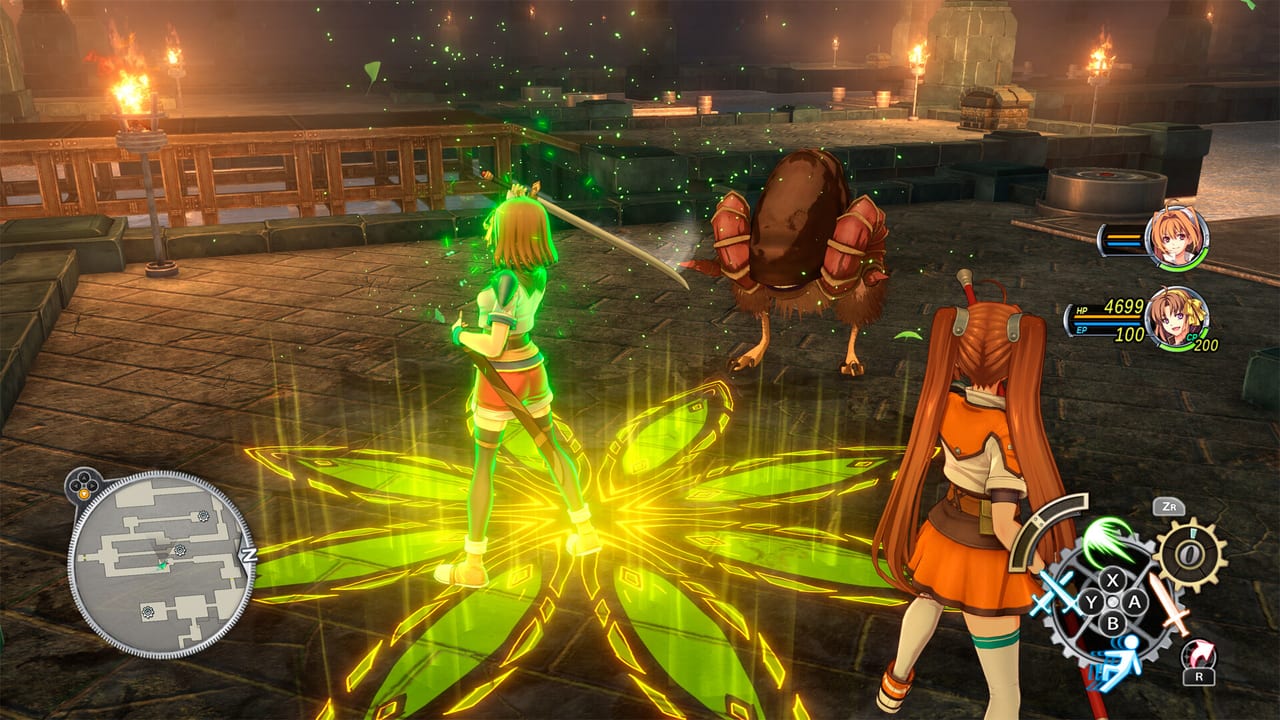
Trails in the Sky 2nd Chapter fights on two layers: Quick Battle in the field and Command Battle when you want turns, Arts, and positioning. Swap when the encounter changes. This page stays on confirmed systems — Brave Rush, Crafts and S-Crafts, Enforcer Boost, and cooking buffs — and does not invent HP values or craft names. Pair it with getting started if you are still installing, the demo walkthrough for early Enforcer timing, and the orbment guide for Arts.
Quick Battle versus Command Battle
Quick Battle is the action layer. You move the active character, hit, dodge, and build resources in real time. It is the right tool for highway trash, delayed travel, and learning attack timing. It is the wrong tool for a named Enforcer if you have not looked at your Craft list. Command Battle is the series’ turn layer: AT order, Arts, items, and the decisions that made older Trails fights feel like puzzles. Swap into Command Battle when you see a shield pattern you do not understand, a group that will punish a missed dodge, or any Ouroboros title card.
Treat Quick Battle as the scout and Command Battle as the plan. The demo has no timer, so retry a highway pack until the swap feels cheap. Camera and confirm buttons are on controls.
Brave Rush
Brave Rush is the headline addition. In Quick Battle, spend two Brave Gauge points to pair the active character with a partner for a wide, high-damage combo. Two points is the whole confirmed cost. Do not spend the gauge because it is glowing; spend it when two people hitting a lane will actually end the threat. A partner combo is wasted on a single leftover beetle and precious when three enemies share a line.
Build the gauge on fights you already expect to win, then walk into a named encounter with two points in the bank. If Command Battle is the better layer for that boss, swap — Brave Rush is a Quick Battle spend, not a reason to ignore turns. Party pairings matter: Estelle with Joshua feels different from a guest who just joined. Roster roles are listed on party members. Rankings, if you want them, are on the party tier list.
Crafts, S-Crafts, and Enforcer Boost
The remake adds new Crafts and S-Crafts rather than photocopying every old animation. Use Crafts as the reliable spend and S-Crafts as the meter you refuse to dump on the first bar of a fight. Because this wiki does not have an official craft table, learn names from the in-game list and judge them by range, delay, and whether they support Brave Rush, not by a fan-made DPS column.
Enforcer Boost is an advanced Rage Boost used by Ouroboros Enforcers. Read that as a warning, not a loot table. When an Enforcer boosts, your old habit of chipping in Quick Battle becomes a way to donate turns. Swap to Command Battle, check Arts, and decide whether you are breaking a buff, inflicting a status you actually have, or stalling until Brave Gauge is ready on the next Quick window. Society names and relationships sit on the Ouroboros page. Do not expect this guide to list every Enforcer in the full game; the demo only promises early ones.
Cooking buffs and Attack Food in a fight
Cooking is a battle tool. Success, Peculiar, and fail are the three outcomes. Failures can create Attack Food that deals damage in Command Battle with no CP or EP cost. That is a free chip option when you are saving Craft points for a later bar. Some dishes buff Quick Battles; if you swap to Command Battle, the buff lasts up to two turns. Eat before a fight you plan to start in action mode, then swap without panicking that the dish vanished.
Fishing and recipe hunting are not covered here. They live on side content, which also explains designated fishing spots and poker. Bring Attack Food into Le Locle training and into the first Enforcer so you are not learning the fail-forward rule during a story beat.
How to beat early Enforcers (no invented HP)
An early Enforcer is a systems exam. You will not find a damage number on this wiki because Falcom has not published one we can repeat. The conceptual loop is enough:
- Scout in Quick Battle only until you have seen one dangerous animation. Then swap.
- Keep two Brave Gauge points banked. The partner combo is your wide punish, not your opener.
- In Command Battle, spend Arts that match the confirmed elements you actually slotted — Water, Wind, Time, Space, or Mirage — instead of hoping a random quartz does something legendary.
- Use Attack Food if a fail recipe is sitting in the bag. It costs no CP or EP.
- Hold S-Crafts until Enforcer Boost makes the fight longer than a regular boss, not shorter.
If the party is under-leveled, go back to a highway, cook, and return — the demo has no timer. Deck stutter is not a mechanic; system requirements cover the 40–50 FPS Medium reports. Bank two gauge, respect Enforcer Boost, and let cooking failures become Command Battle chips. Loadouts belong on the quartz tier list; come back here the next time a partner combo whiffs on a single target.
Frequently Asked Questions
Quick answers for demo players and anyone waiting on the September launch.
When should I stay in Quick Battle?
Use it for field trash and for building Brave Gauge. Swap to Command Battle for Enforcers and messy groups. The demo walkthrough flags those story fights.
How does Brave Rush work?
Spend two Brave Gauge points in Quick Battle to pair the active character with a partner for a wide high-damage combo. Pairing ideas sit on party members.
What is Enforcer Boost?
An advanced Rage Boost used by Ouroboros Enforcers. Treat it as a cue to change layers. Names and roles continue on the Ouroboros page.
Do cooking dishes affect combat?
Yes. Some buff Quick Battles (up to two Command turns if you swap). Failures can make Attack Food with no CP/EP cost. See side content.
Where do Arts and quartz fit?
Seven slots and confirmed Arts are in the orbment guide. Rankings are on the quartz tier list.
Does combat change on PC or Deck?
Systems do not change. Frame-rate and FSR notes are on system requirements. Inputs are on controls.